
Every Khanapara Teer follower eventually asks the same question: what happened on that date? Whether you are checking an old ticket, comparing this month with the last, settling a friendly debate, or simply curious about how the game has unfolded over time, the khanapara teer previous result archive is where the answer lives. It is a complete, date-ordered record of every declared first round and second round number, and knowing how to use it turns a long wall of dates into a tool you fully control.
Khanapara Teer is an archery based lottery played near Guwahati in Assam, with its roots in the traditional teer game of neighbouring Meghalaya. On each playing day two rounds are held, the first round (FR) and the second round (SR), and each round produces one two digit number from 00 to 99. The archive records every declared number in order, so any past result can be traced, checked, and confirmed at any time. This guide explains what the archive contains, how to read a khanapara teer result list, how monthly charts are organized, how to look up any date, how to build your own records, and what past results can and cannot tell you. There are no invented numbers here and no predictions of any kind, only a clear method for working with old records.

What a Khanapara Teer Previous Result Archive Contains
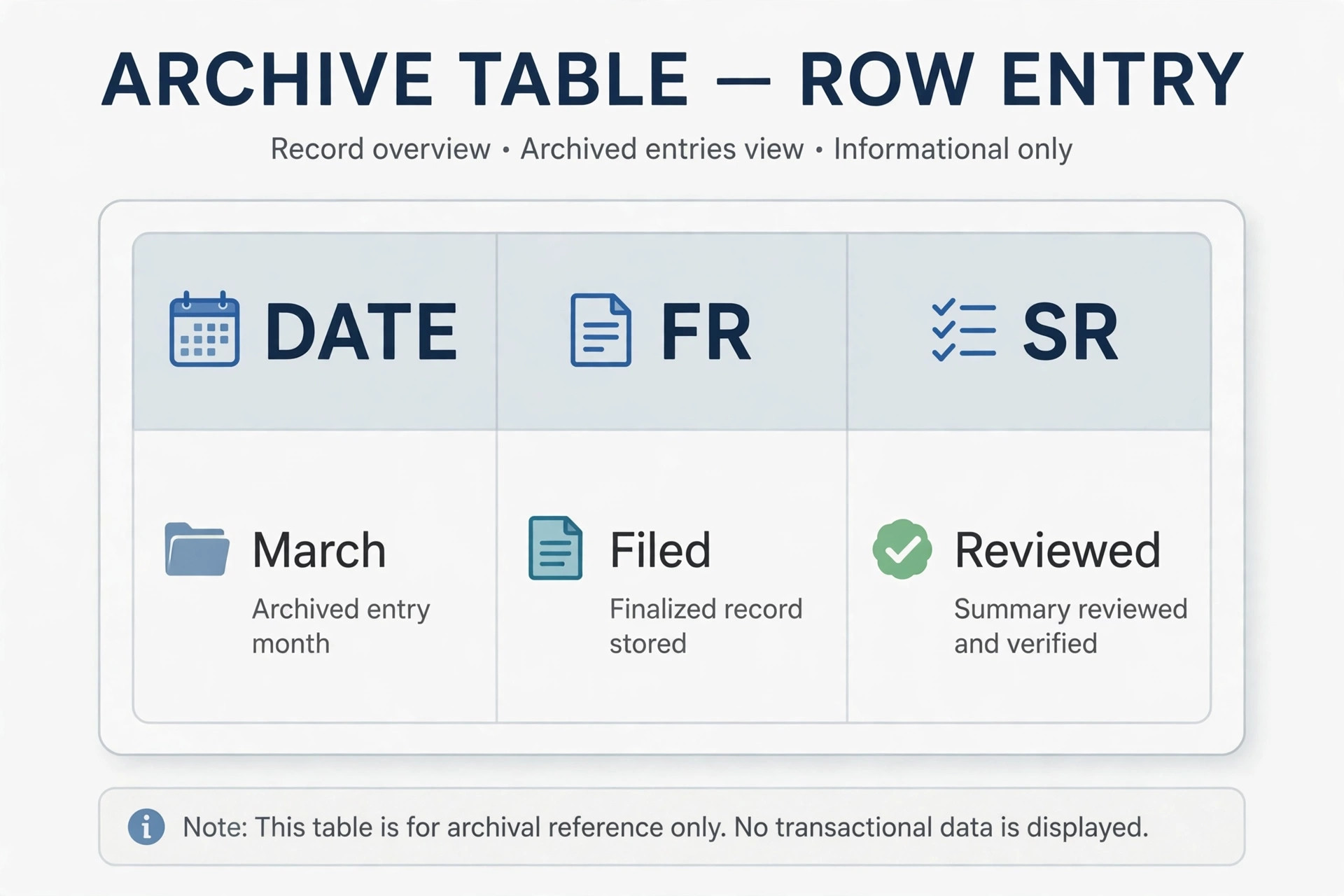
A result archive is simply the game’s memory. Each row of the archive represents one playing day and stores three pieces of information: the date, the FR number declared in the first round, and the SR number declared in the second round. Rows are ordered newest first, so the most recent playing day sits at the top and older dates extend downward. This ordering is deliberate. The most common lookup is yesterday, and newest first ordering puts it one glance away.
The archive covers only declared results. If no game was held on a particular day, no row is created for it, or the row shows a dash where a number would normally sit. Sundays are the best known example. No Khanapara Teer game is held on Sundays, so Sunday never appears with numbers. Public holidays can cause the same gap. Understanding this keeps you from misreading the archive: a missing date is not a missing record, it is a day when no result existed to record.
Archives also distinguish between sessions. Khanapara Teer runs a morning session and a main day session, and each has its own FR and SR rounds with its own declaration times. A well built archive keeps these sessions separate, either on separate pages or in clearly labelled sections, because the two sessions are independent games with independent numbers. The Khanapara Teer result page on the Fast Teer Results homepage network carries the main day session, while morning numbers live in their own section.
Over time an archive grows into a genuine historical record. A full year of archives holds hundreds of playing days and hundreds of FR SR pairs, all searchable and verifiable. That depth is what makes the archive valuable. A single day’s result answers a single question, but the full archive answers every question about the past that the game can legitimately answer.
How Khanapara Teer Works – FR and SR Rounds Explained
To use the archive well, you need to understand what each entry represents. Khanapara Teer is based on archery. In each round, a set number of arrows is shot at a target by skilled archers, and the result is derived from the count of arrows that strike the target. The last two digits of that count become the declared number for the round, which is why every result falls between 00 and 99. The background of this unusual lottery format is documented in the Wikipedia article on Teer, which describes how the archery based game developed in the region.
Each playing day has two rounds. The first round (FR) is the opening session of the day, and the second round (SR) follows later. Each round is a separate event with its own archers, its own arrow count, and its own declared number. The FR and SR numbers on the same date are therefore independent of each other. Reading them as a pair is correct for record keeping, but neither influences the other.
Declaration follows a daily rhythm. The day session’s first round is typically declared in the mid afternoon, and the second round follows about an hour later in the early evening. The morning session runs earlier in the day, with its own FR and SR declared before noon. Exact clock times can shift slightly with the season or the organisers’ schedule, so treat published times as guidance rather than promises. The archive, however, records only what was actually declared, never what was expected.
One more structural point matters for archive readers. Teer is a state regulated lottery, legal in Meghalaya under the state’s lottery framework, with the Khanapara game operating near the Assam border under local arrangements. The Meghalaya government portal is the authoritative source for the state’s official position on lotteries and gaming regulation. The game is for adults aged 18 and above only, and responsible participation is the only sensible approach.
Khanapara Teer Result List – How to Read Every Row
The khanapara teer result list is the day by day backbone of the archive. It presents records as simple rows, and each row has the same anatomy: date on the left, FR number in the middle, SR number on the right. Once you learn this pattern, you can read any row in any archive on any website without instruction.
Start every read at the date. This sounds obvious, but most archive mistakes come from skipping it. Readers in a hurry grab the first numbers they see, which may belong to a different day, a different session, or even a different market. A one second glance at the date anchors everything else you read.
Next, read FR, then SR, in that fixed order. The fixed order protects you against the most common misread, which is taking the SR number for the FR number or vice versa. On wide screens the columns are clearly separated, but on phones the columns compress, and a drifting eye can easily cross from one column to its neighbour. Train the habit of moving left to right every single time, and compressed layouts stop being a hazard.
Learn the meaning of special cells. A dash in place of a number means no result was declared for that round, which is normal on Sundays and public holidays. A dash is information, not an error. The number 00 is different. Zero zero is a genuine declared outcome, a perfectly valid result. At speed the two can look similar, so slow down for a beat whenever you see either, and be certain which one you are looking at.
Preserve leading zeros exactly. A result of 07 is written 07, and it must be copied as 07, because 07 and 70 are entirely different outcomes. This matters most when you transfer numbers by hand into a notebook or dictate them to someone. Saying “zero seven” out loud prevents the most common spoken error. The archive preserves these zeros for you; your job is to carry them forward without dropping them.
Finally, understand what the list does not show. The archive shows outcomes, not causes. It will not tell you how many arrows were shot, how many hit the target, or why a particular count arose. It records the declared two digit number and the date, and that is the complete factual content of each row. Anything beyond that is interpretation, and interpretation is where errors and myths begin.
Khanapara Old Teer Result Records and Monthly Charts
Beyond the daily list, archives are often presented as weekly and monthly views, and the khanapara teer chart is the most compact of these formats. Where a list shows one row per day in a long column, a chart arranges the same data into a grid, usually one week per row or one month per block, with FR and SR numbers sitting side by side for each date. The information is identical; only the layout changes.
Weekly charts are the workhorse view for recent history. A single screen shows seven days of FR and SR pairs, which is enough to review the last week without any scrolling. This is the view most readers use when they want to refresh their memory of recent days or check a date they roughly remember. If you know the result you want is “sometime last week,” the weekly chart is the fastest place to find it.
Monthly charts compress further. A full month of playing days fits into one grid, making it easy to scan a whole month at once. Monthly views are useful when your target date is vague, such as “midway through last month,” or when you want a general sense of a month’s records. Many archives offer a month and year selector that jumps straight to any month, which beats scrolling through weeks of list rows for older dates.
When reading a chart, the same rules apply as with a list. Confirm the month and year shown at the top of the grid before reading any number. Charts sometimes include empty cells for Sundays and holidays, and these blanks must be read as no game, not as zero. Keep the FR SR column order fixed in your reading, exactly as you would in a list, because charts compress columns even more aggressively than lists do.
A note of caution belongs here. Charts make patterns visually obvious, and the human brain is wired to find meaning in patterns. Rows of numbers will always seem to contain streaks, clusters, and rhythms, because randomness itself produces streaks and clusters. A chart is a record of what happened, not a map of what will happen. Enjoy the history, use the records, but do not mistake visual patterns for predictions. There is a longer explanation of this in the section below on what past results can and cannot tell you.
How to Find Any Khanapara Teer Previous Result by Date
With the archive’s structure understood, finding a specific date is a short mechanical process. The method below works on any well built archive and takes under a minute for most dates.
Step 1 – Open the correct session archive. Confirm whether you need the main day session or the morning session, and open that session’s page. Opening the wrong session is the single most common cause of a failed lookup, and the fix is a one second check of the page heading before you begin.
Step 2 – Decide how far back your date is. If it is yesterday, read the first archive row below today’s numbers. If it is within the last week, scroll the newest first list and count days downward. If it is older than about two weeks, use the archive’s month selector to jump directly to the target month instead of scrolling.
Step 3 – Locate the exact date. In a list view, scan the date column; in a chart view, scan the grid. If your browser has a find in page function, typing the date in the archive’s own date format jumps you straight to it. Match the format exactly, because a date written differently will not be found.
Step 4 – Read the row left to right. Date first, then FR, then SR. Preserve leading zeros. Note dashes as no result rather than zero.
Step 5 – Sanity check the result. Ask three questions: is the date the one I wanted, is the session the one I wanted, and do FR and SR both look like proper two digit entries or dashes? If all three answers are yes, the lookup is complete.
For dates more than a few months old, add one more consideration. Websites occasionally redesign their archives, and very old records may be paginated or moved. If a date you expect is not where the pattern says it should be, try the month selector for the surrounding months before concluding the record is absent. Genuine gaps are rare and almost always correspond to Sundays or holidays.
The teer result list page gathers the cleanest row layout for precise single date reads, and the Khanapara Morning Teer result page holds the morning session archive when your date belongs to the morning game.
What Past Results Can and Cannot Tell You
This is the most important section of this guide, because it draws the line between legitimate uses of old records and the myths that surround them. Past results can tell you exactly one thing with certainty: what the declared number was on a given date, in a given session, in a given round. That is their full and complete power, and it is genuinely useful for checking tickets, keeping records, studying the game’s history, and verifying claims.
Past results cannot tell you what the next number will be. Every round of Khanapara Teer is an independent event. The archers shoot, the arrows land, and the count is what it is. Yesterday’s numbers have no influence on today’s, last month’s chart has no influence on next week’s, and no amount of studying old records changes that. This is not a limitation of the archive; it is the nature of the game. Believing otherwise is the gambler’s fallacy, the well documented error of treating independent events as though they remember each other.
This is why this guide contains no common numbers, no hit numbers, no target numbers, and no house or ending suggestions. Prediction content is not merely unreliable; it is the exact opposite of what an archive is for. An archive is a factual record of the past. Anyone who claims to derive future numbers from it is selling certainty that does not exist. Treat every such claim, wherever you encounter it, with complete scepticism.
There are honest analytical uses of old records that stay on the right side of this line. A researcher might study how often each round is declared on time, or how frequently holidays interrupt the schedule. A player might audit their own spending against their own records. A curious reader might simply enjoy the history. All of these use the archive as what it is: a record. The moment analysis turns into “this number is due,” it has crossed into prediction, and prediction is where this guide stops.
If you take one idea from this article, take this: the khanapara teer previous result archive is a mirror of the past, not a window into the future. Use the mirror. Ignore anyone selling the window.

Building Your Own Khanapara Teer Previous Result Record Book
The public archive is authoritative, but many regular followers keep a personal record book alongside it, and there are good reasons to do so. A personal book holds your own notes, your own ticket references, and your own observations in one place, in a format you control. It also protects you against the rare occasions when a website is down or an archive is being redesigned.
The simplest effective format is a notebook or spreadsheet with four columns: date, session, FR, SR. One row per playing day. That is the entire system, and it is enough for every legitimate purpose. Add a fifth column for notes if you like, where you can record things like “checked against archive” or “holiday, no game.” Keep the notes factual. The book is a record, not a diary of hunches.
Discipline matters more than format. Fill in the row on the day itself, from the archive, while the date is certain. Backfilling weeks later from memory is how errors enter. A two minute daily habit produces a flawless personal archive within a month; a monthly catch up session produces a book full of guesses. The archive is always there for verification, so use it as your source rather than your memory.
Cross check your book against the public archive periodically. Pick a random week each month and compare every row. This takes five minutes and catches any copying error before it hardens into a “fact” you rely on. If you ever find a disagreement between your book and the archive, trust the archive, correct your book, and note the correction. A record book that cannot be corrected is not a record book.
Digital or paper is a matter of taste. Paper notebooks work without internet and survive phone changes. Spreadsheets sort, filter, and back up easily. Some readers photograph their paper pages as a backup, getting the best of both. Whatever you choose, keep the book private. Your records are for your use, and sharing screenshots of partial records is one of the ways misinformation about old results spreads.
One final rule for the personal book: never let it become a prediction tool. The moment you start circling numbers, drawing arrows between dates, or annotating “due” beside a digit, you have stopped keeping records and started manufacturing predictions. The archive stays honest only as long as you do.

A Short History of Khanapara Teer
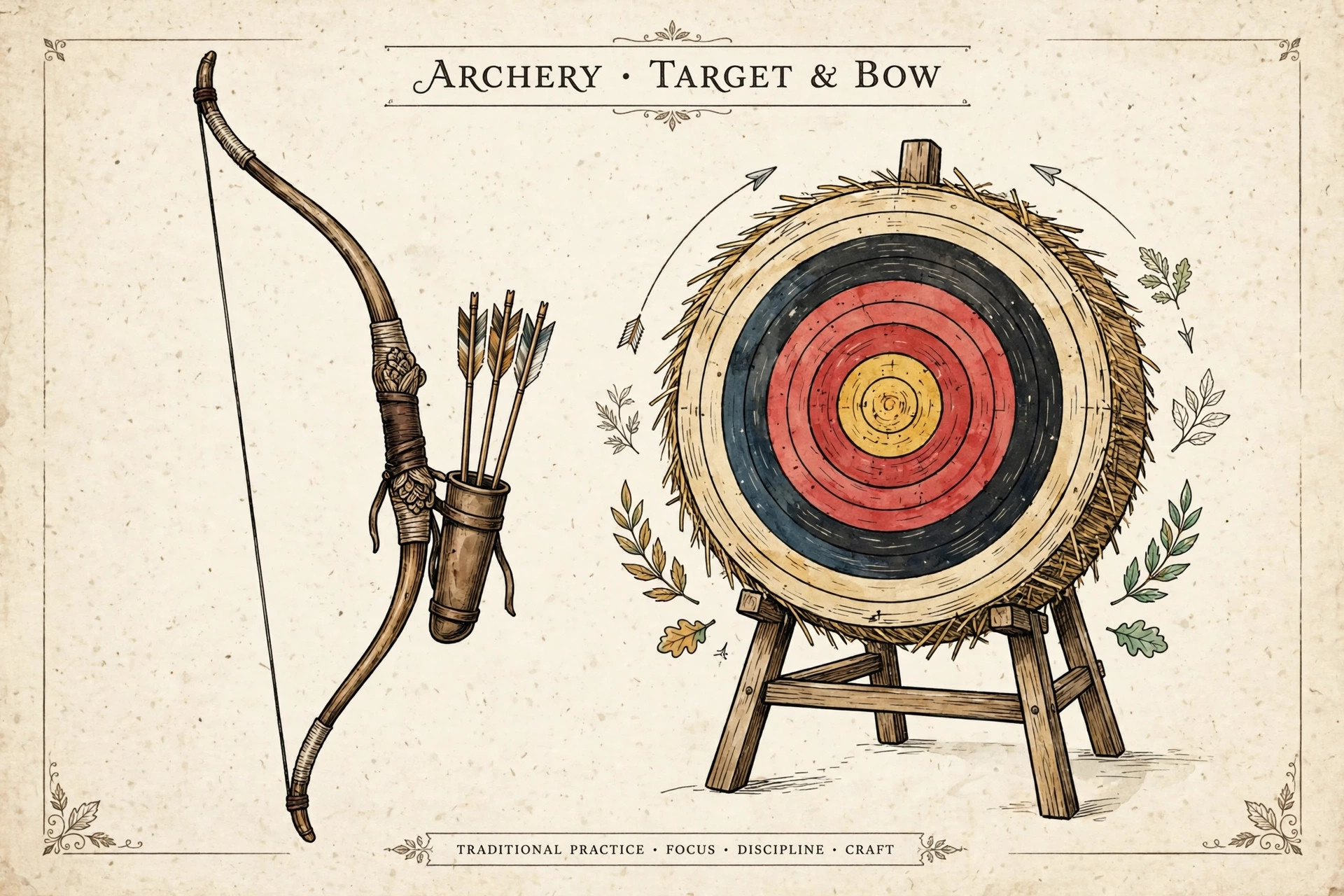
The khanapara teer history is inseparable from the archery traditions of the Khasi hills. Teer as a game grew out of the indigenous archery culture of Meghalaya, where skilled bowmen have competed for generations. The leap from traditional archery contests to a numbers based lottery preserved the archery itself: real archers, real arrows, a real target, with the lottery number derived from the count of hits. This is what makes teer unlike any other lottery format in India, and the Wikipedia article on Teer traces this distinctive origin.
Khanapara sits at the edge of this tradition geographically and culturally. Located near Guwahati on the Assam Meghalaya border, it became the venue for a teer game serving the large population of the Guwahati area. The Khanapara game follows the same two round structure as its Meghalaya counterparts: a first round and a second round each playing day, with numbers drawn from the archers’ performance. Over the years it has developed its own following, its own session timings including a morning game, and its own archive that regulars consult daily.
The game’s legal standing comes from the lottery framework of the region. Teer operates as a legal, state regulated lottery in Meghalaya, and participants must be adults aged 18 or older. The official Meghalaya government portal carries the state’s formal position on regulated gaming. Players should always confirm the current legal position for their own location, since lottery regulation in India is a state subject and rules differ across state borders.
The archive itself is part of this history. In the early days, results travelled by word of mouth and were chalked on boards at teer counters. The move to published daily records, and later to online archives, changed the game for followers: every declared number became permanently checkable, disputes over old results became settleable in seconds, and the full history of the game became a public resource. Today’s archives are the direct descendants of those chalk boards, carrying the same three facts per day: the date, the FR, and the SR.
Verifying an Old Result Across Independent Sources
For most purposes the archive on a trusted site is sufficient. But when a number truly matters, when you are settling a disagreement, finalising your records, or checking a ticket you found months later, verification against a second independent source is worth the extra minute.
The method is simple. Take the date, session, and round from your first source and look up the same three values on a second site that publishes its own archive. If both agree, you can treat the number as confirmed. If they disagree, look at a third source before deciding. Genuine disagreements between established archives are rare, and when they happen, the most common cause is a corrected declaration: one site updated its record after a correction and the other did not. The corrected value is the one that appears consistently across the majority of sources.
Be especially careful with numbers that reach you through forwarded messages. A screenshot of an old result, passed from phone to phone without its date, is the fastest route to a wrong number. Screenshots can be cropped, edited, or simply outdated, showing a number that was later corrected. Treat every forwarded number as an unverified claim. Run it through the archive check: find the date it supposedly belongs to, confirm the session and round, and read the archived value yourself. The minute this takes is always cheaper than the confusion a wrong number causes.
Timing matters in verification too. If you noted a number on declaration day, recheck it in the archive a day later before treating it as final. Organisers occasionally correct a declared result after the first announcement, and the archive reflects the corrected value. A next day recheck is the only way to catch these rare corrections, and it takes seconds.
Finally, remember that no verification can conjure a result for a day when no game was held. If the archives consistently show a dash or a gap for a Sunday or a holiday, that is the verified truth: no result exists for that date. Accepting the gap is part of reading archives honestly.
Frequently Asked Questions
Where can I find the khanapara teer previous result for yesterday?
Open the Khanapara Teer result archive and read the first row below today’s numbers. Because archives are ordered newest first, that row holds the most recent playing day. Always confirm the date in the row first: on Mondays the top row is usually Saturday, since no game is held on Sundays.
How far back do khanapara teer previous result archives go?
It depends on the publisher, but well maintained archives hold many months and often a full year or more of daily FR and SR records. For dates older than a few weeks, use the archive’s month selector to jump directly to the target month instead of scrolling.
What is the difference between the khanapara teer result list and the khanapara teer chart?
They contain the same information in different layouts. The result list shows one row per day in a long column, while the chart arranges the same dates into a weekly or monthly grid. Use the list for precise single date reads and the chart for scanning a whole week or month at once.
Why does the archive sometimes show a dash instead of a number?
A dash means no result was declared for that round. This is normal on Sundays, when no game is held, and on public holidays when play is suspended. A dash is not an error and not a zero; it simply marks a day with no game.
Can I use khanapara old teer result records to predict future numbers?
No. Every round is an independent event, and past numbers have no influence on future ones. The archive is a factual record of what happened, useful for checking tickets and keeping records, but it cannot predict anything. Treat any prediction claim based on old results with complete scepticism.
How do I know an old result I found online is genuine?
Verify it against the archive yourself: confirm the date, the session (morning or day), and the round (FR or SR), then read the archived value. For numbers that matter, cross check the same date on a second independent archive. Be wary of forwarded screenshots, which lose date context and may predate a later correction.
Do morning and day sessions share the same previous result archive?
No. The morning session and the main day session are separate games with separate FR and SR rounds, so each has its own archive. Always check the page heading to confirm you are reading the session you intend before copying any number.
Conclusion
The khanapara teer previous result archive is one of the most useful tools a follower of the game can learn to use. It holds every declared FR and SR number in date order, it answers any question about the past that the game can legitimately answer, and it rewards a few simple habits: read date first, then FR, then SR; confirm the session; preserve leading zeros; and verify against a second source when the number matters. Keep your own record book beside it, respect what the records cannot tell you, and the archive will serve you faithfully for years.
Teer is a legal lottery game in Meghalaya, open to adults aged 18 and above only. Please play responsibly.